
Our Blog
Blogs
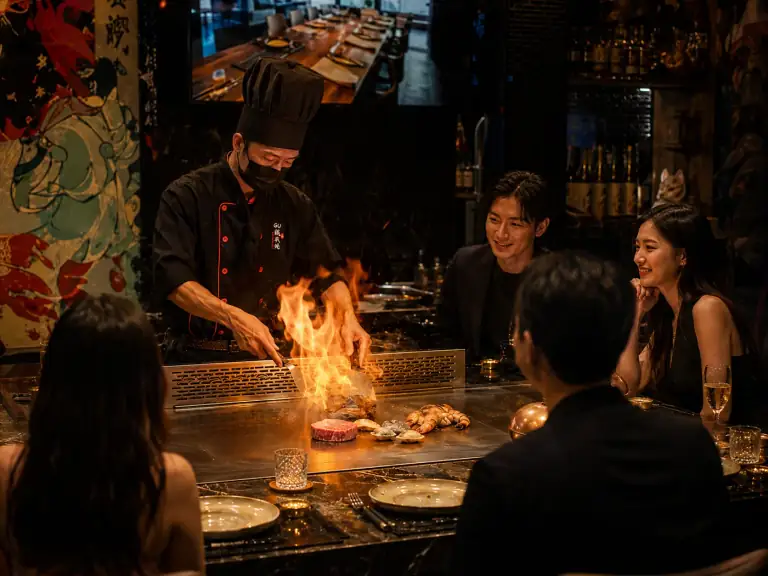
Teppanyaki chefs cook in front of guests so heat control, ingredient handling and the moment each dish is served become visible parts of the meal. The short distance from teppan to plate also allows courses to be served soon after they are completed.
The purpose is not spectacle alone. Flames and sound can add energy, but accurate temperature, timing, texture and coordination remain the more meaningful measures of the cooking.
The flat teppan can contain hotter and cooler areas. Meat, seafood, mushrooms and vegetables need different temperatures and contact times. Cooking nearby lets guests observe how the chef moves ingredients, develops a seared surface and checks doneness.
For the cooking method itself, see what Teppanyaki means.
Many Teppanyaki dishes are intended to be eaten shortly after cooking. Preparing them beside the seats reduces the time between the surface and the guest.
This supports course-by-course service. The chef can prepare the next item as the table finishes the previous one instead of holding an entire menu until every dish is ready.
An open format makes preparation easier to observe, but visibility alone does not guarantee better food. Ingredient quality, storage, sanitation, seasoning and skill still matter.
What guests gain is a closer view of decisions that are often hidden: when an ingredient touches the surface, how long it cooks and how the chef coordinates with the service team.
Depending on the menu, the chef or service team may introduce an ingredient, explain suggested doneness or indicate how a dish should be eaten. Guests can ask concise questions, but allergies and dietary restrictions should not be left until the course reaches the teppan.
Share essential information during booking so the kitchen can assess it before service. Adjustments are subject to the confirmed set and shared-kitchen conditions.
Useful details include:
The size of a flame is not a reliable summary of these skills.
Teppanyaki Omakase at The Gu combines teppan cooking with a confirmed course sequence. The 9-seat counter offers the closest shared setting; private rooms accommodate 5 or 12 guests, subject to availability.
Use the seating and private-room guide to decide which arrangement fits the group.
No. Visibility can be engaging, but its practical value is seeing heat control, timing and direct service from teppan to plate.
No. Flame size does not prove ingredient quality, doneness or technique. Guests should pay more attention to control and consistency.
Preferences should be provided when booking and confirmed with the restaurant. Whether a request is possible depends on the set and ingredient.
Do not wait until service. Disclose allergies and dietary restrictions before the booking is confirmed so the kitchen can assess the request.
Browse The Gu dining guides for related articles. Menu, ingredients, doneness requests, seating and preparation time remain subject to confirmation.