
Dates and anniversaries
A private room for 2–5 guests offers privacy while the chef cooks at your table.
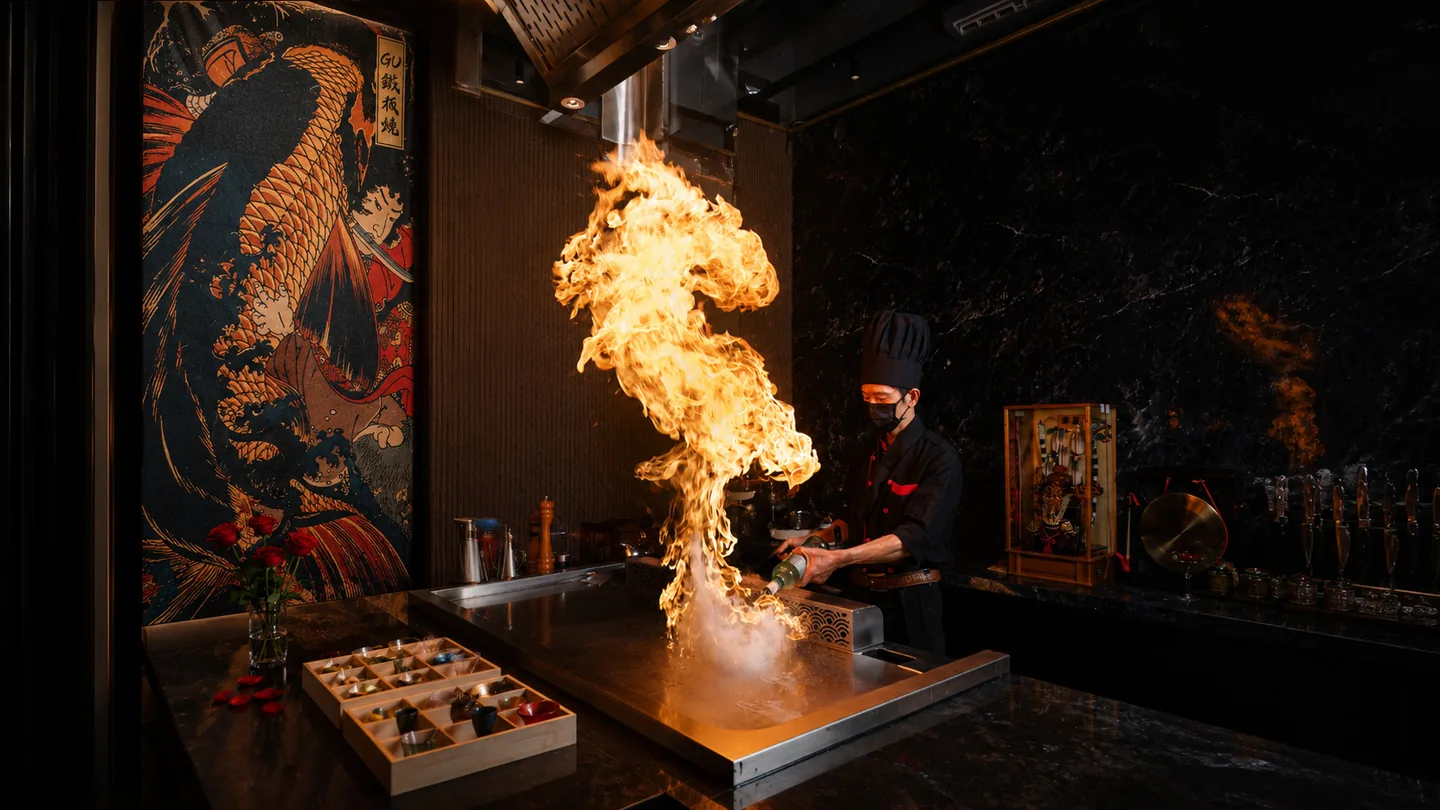
THE GU · HO CHI MINH CITY
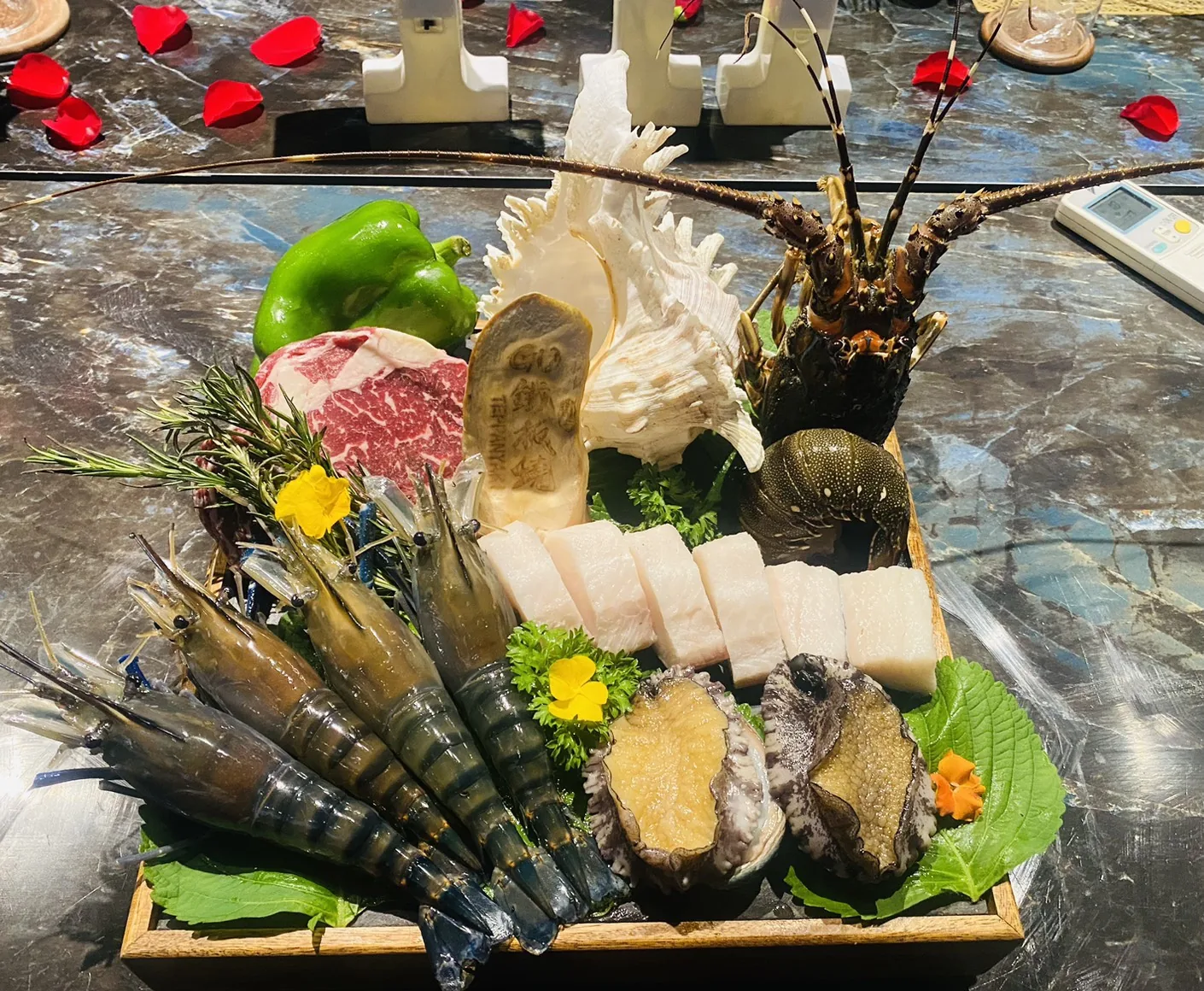
At the teppan, the chef prepares each course in front of guests. Selected Omakase menus may feature Kagoshima A5 Wagyu, French foie gras and seasonal seafood.
Counter · 1–9 guests · Private rooms · 2–5 or 6–12 guests · Hotpot rooms · 8 or 16 guests
Call 0703 888 329CHOOSE YOUR TABLE
Choose by party size, privacy and how closely you want to follow the chef at work.
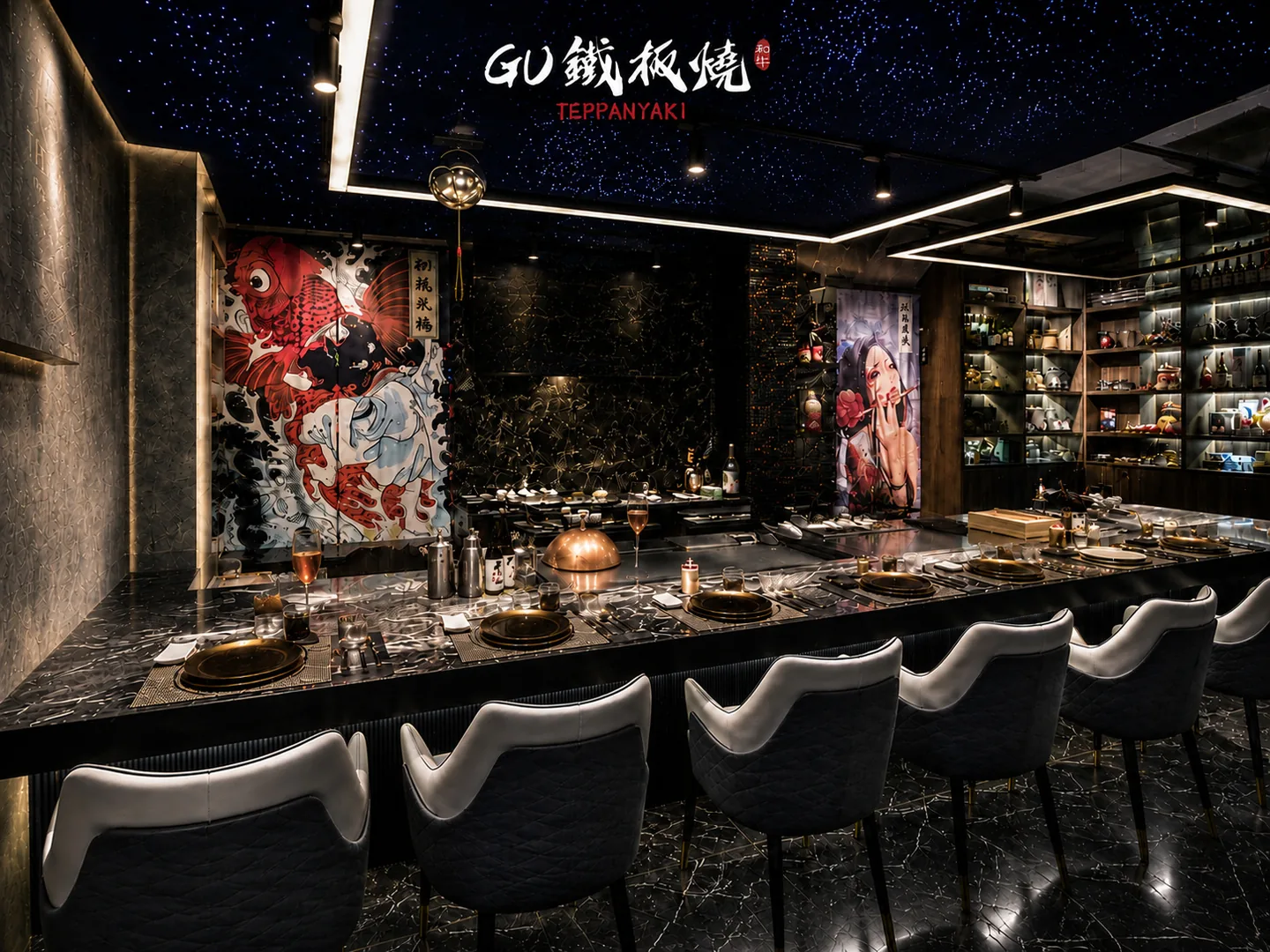
1–9 guests
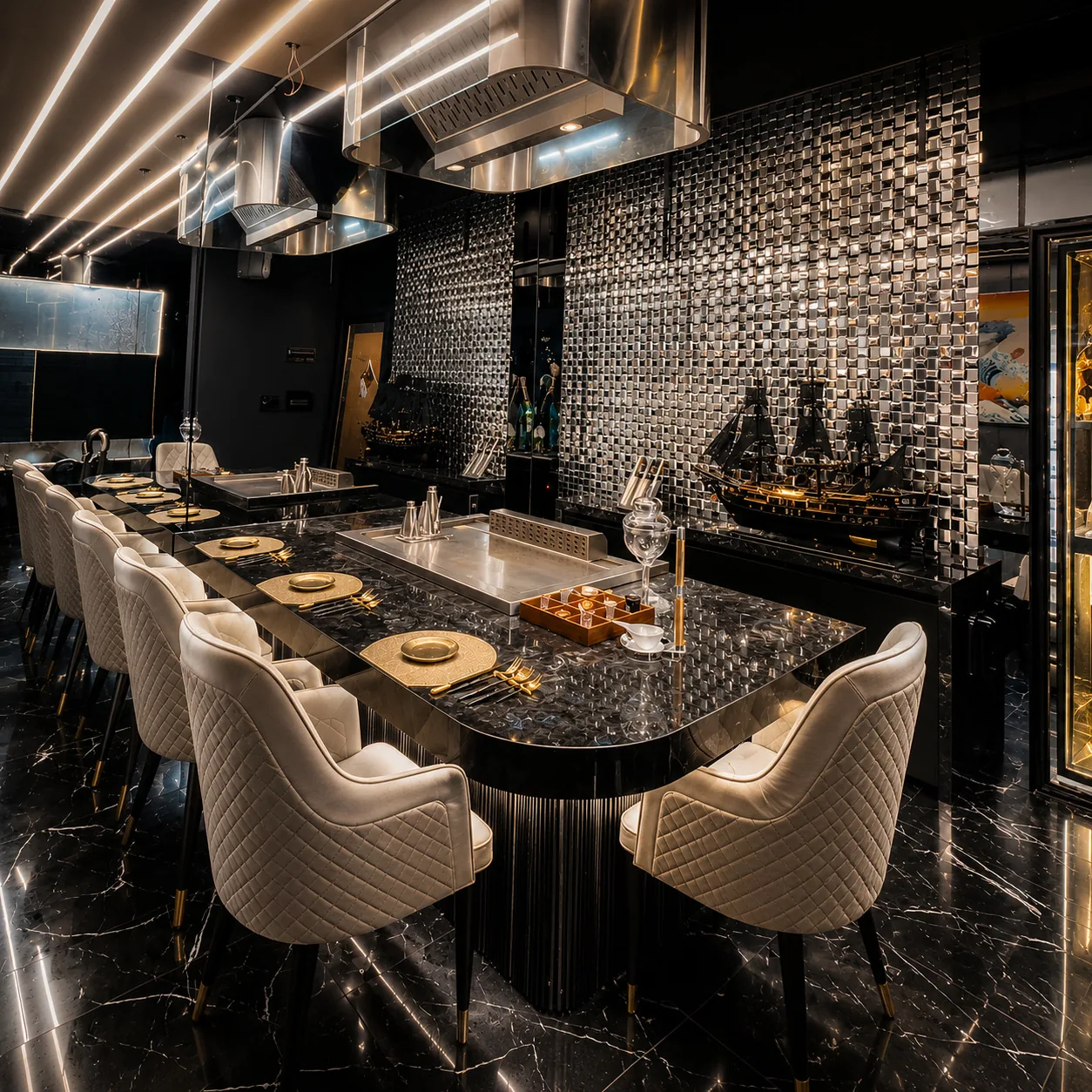
2–5 or 6–12 guests
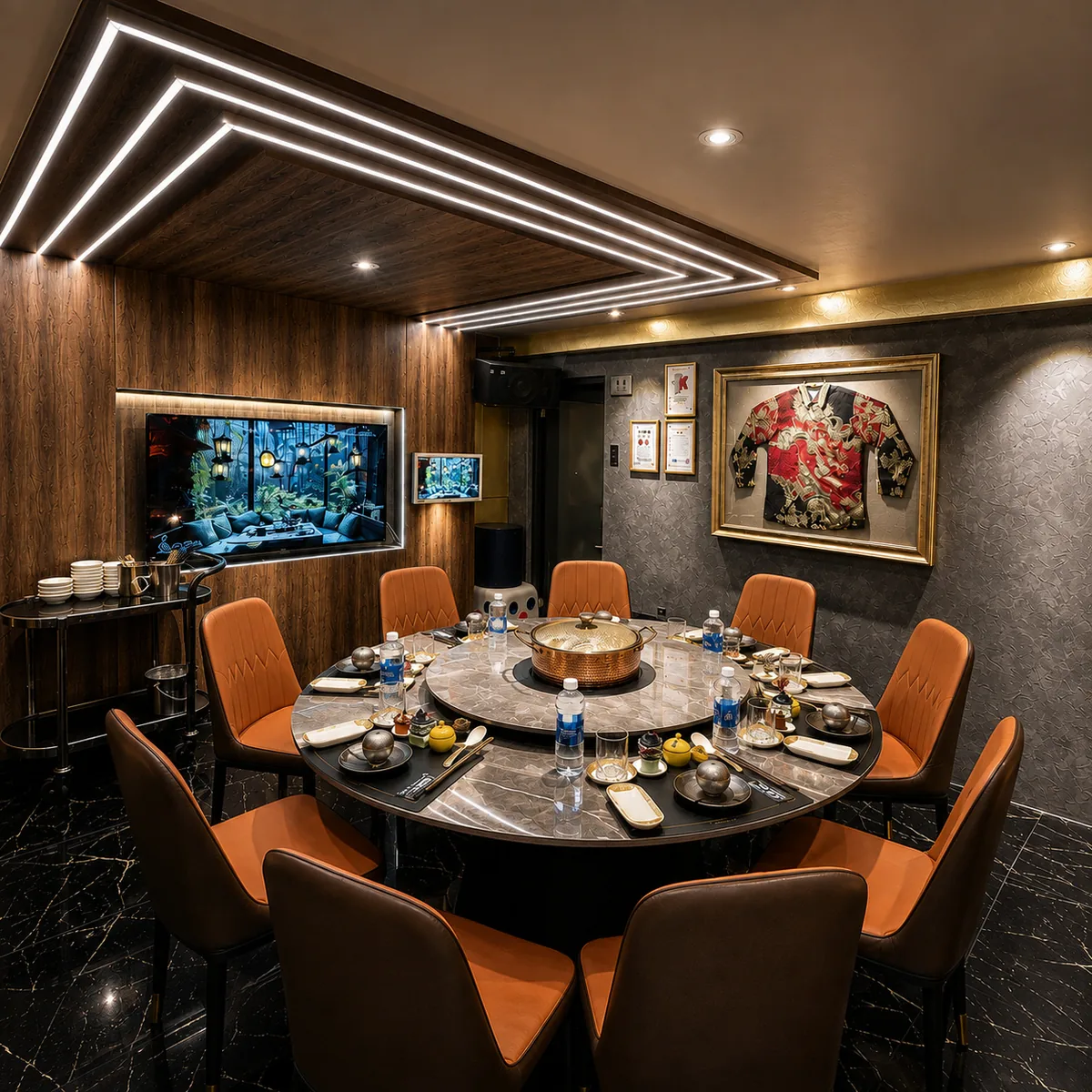
8 or 16 guests
AT THE TEPPAN
Selections vary by set menu and current supply, and may include Kagoshima A5 Wagyu, French foie gras, Norwegian snow crab, Boston lobster and Norwegian king crab. Exact ingredients are confirmed when reserving.
Teppanyaki Omakase sets begin at 990,000 VND; every set includes at least 14 individually prepared courses, paced and portioned as a complete meal.
PRIVATE DINING
THE GU has an open counter and private rooms; after learning your party size and occasion, the team will recommend the most suitable available setting.
A private room for 2–5 guests offers privacy while the chef cooks at your table.
Mention the occasion when reserving and share any details you would like the team to consider.
Choose a private Teppanyaki room for 6–12 guests or a Hotpot Omakase room for 8 or 16.
AT THE TEPPAN
At THE GU, Teppanyaki Omakase is a chef-led set meal prepared before guests. Each course moves from ingredient introduction to completion on the teppan.
GUEST REVIEWS
451 Google reviews
Google rating and review count as of 17 August 2026. Visit Google to read the latest guest comments.
Read reviews on GoogleRestaurant information and photography on this page are provided by THE GU.
View THE GU on Restaurant GuruRESERVATION DETAILS
Share your date, time, party size, preferred way to dine, room request and dietary requirements. Your table is confirmed once THE GU replies.
329 Tran Binh Trong Street, Cho Quan Ward, Ho Chi Minh CityDaily 11:00–15:00 and 18:00–22:00Preparing the right details lets the restaurant check the dining format, seating and service status for the requested time.
Choose the Teppanyaki counter, a private room or Hotpot Omakase; prepare the date, time, party size, budget or preferred set, and relevant dietary information.
Use the current Zalo channel or telephone number displayed on the website to begin the conversation with the restaurant.
Send the preferred time, party size, dining format, set preference and dietary information so the restaurant can check the request.
THE GU replies with the service status and any details that still need confirmation for the specific request.
Treat the table as booked only when THE GU clearly confirms the request; a sent message does not create a confirmed seat.
Sending a request does not confirm a reservation. The booking is complete only after THE GU replies and confirms its status.
View reservation informationChoose the Teppanyaki counter to watch the chef work at the teppan. Private rooms and Hotpot Omakase are other formats; send the party size and dining preference so the restaurant can confirm a suitable option.
Each set shows its applicable unit and party size beside the price. Some sets are for one guest and others for two, so check the specific label before sending a request.
A 10% service charge is added separately to the displayed set price. Confirm any remaining billing details directly with the restaurant for the specific request.
No. A Zalo message or telephone call starts a request; the table is booked only after THE GU replies and clearly confirms the status.