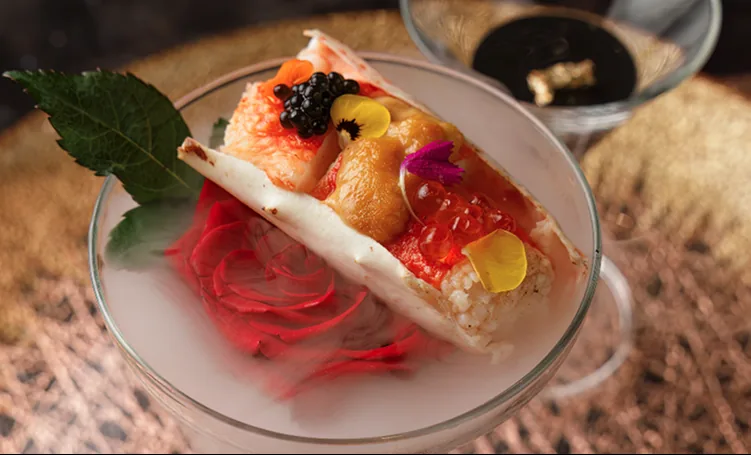
Omakase is a way of dining in which guests entrust the chef or restaurant with selecting and arranging the meal. Instead of choosing every dish independently, guests follow a progression designed around the menu, available ingredients, preparation and serving sequence.
The Japanese expression is commonly understood as “I leave it up to you.” In a restaurant, that trust does not remove the guest’s role: allergies, dietary restrictions, budget, timing and other essential limits should still be disclosed before the booking is confirmed.
Omakase does not name a single recipe and is not limited to sushi. The idea can be applied to sushi, hot dishes, Teppanyaki, hotpot and other formats when the chef or restaurant meaningfully guides selection and sequence.
This is why two Omakase meals can look very different. One may focus on pieces served individually at a counter; another may use a teppan; another may centre on a shared broth. The common element is a curated journey rather than a particular ingredient.
These terms overlap, but they are not identical:
A set menu is not automatically Omakase. It reflects the Omakase idea when the courses are treated as a connected experience rather than as a discounted group of unrelated dishes.
The precise format depends on the restaurant, but guests can usually expect:
Omakase does not mean guests must accept unsafe or unsuitable food. Dietary information should be discussed in advance so the restaurant can determine whether the requested experience is possible.
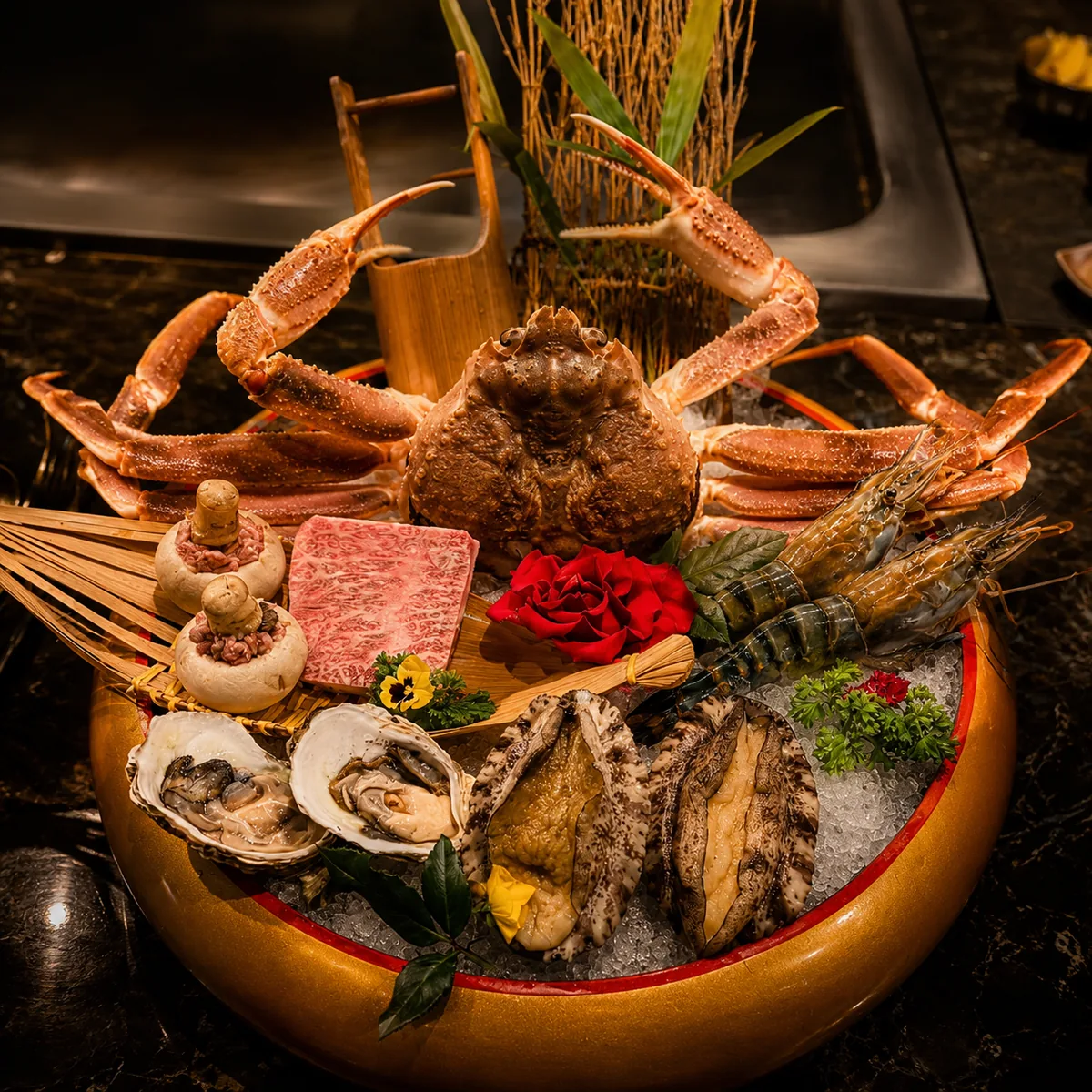
Teppanyaki Omakase combines cooking on a flat heated teppan with a planned course sequence. Guests can observe heat control and preparation near their seats, and dishes can be served as soon as they are completed.
The cooking method and the menu format remain separate concepts: Teppanyaki describes how food is cooked, while Omakase describes how the meal is entrusted and organised.
At The Gu, current details are listed on the Teppanyaki Omakase page.
Hotpot Omakase applies the same curated principle to a shared pot. Broth, seafood, meat, vegetables and the closing course are introduced in stages rather than treated as an unrestricted list.
The format is explained in what Hotpot Omakase means, with current service information on the Hotpot Omakase page.
First-time guests do not need specialist vocabulary. Clear booking information and willingness to follow the planned sequence are more useful than trying to predict every course.
No. Sushi is one well-known expression of Omakase, but the format can also be applied to Teppanyaki, hotpot and other chef-led meals.
No. A set menu becomes Omakase in spirit when the chef or restaurant meaningfully controls selection, preparation and sequence rather than merely grouping dishes together.
Guests should disclose essential restrictions before confirmation. The kitchen can assess requests, but it may not be able to change every course or guarantee complete absence of cross-contact.
The word describes a way of organising the meal, not a price tier. Guests should confirm the current menu, price and additional charges with the restaurant.
Provide the party size, date, preferred time, dietary information, seating preference and any timing constraints, then wait for the restaurant to confirm the experience.
Browse The Gu dining guides for more practical planning. Menu, seating, ingredients, preparation time, dietary requests and deposits remain subject to confirmation.